Choose Well
Bespoke saddles: when expertly-made saddles make all the difference to your horse
11 June 2026

Choose Well
11 June 2026
©linnztrelin
Antarès Sellier has been making saddles in France since 2000, so we know that bespoke saddles are more than just riding tack; they are key to the well-being and performance of horse and rider.
This blog tells you why it’s so important to contact a saddle expert.
Saddle-makers are experts in adapting saddles to suit both horses and their riders. They do more than just design riding saddles.
Crafting bespoke riding tack means analysing:
They use their understanding of horse anatomy and biomechanics to design saddles with both the horse and rider in mind.
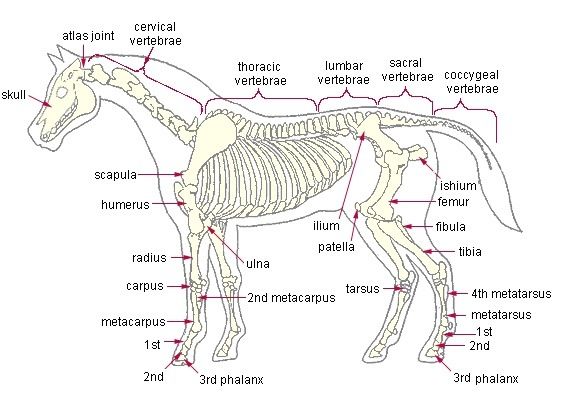
To start with, the horse’s back has different sections with very different types of motion.
The cervical section (7 vertebrae) is very mobile.
The thoracic section (18 vertebrae) is rigid, especially from T1 to T8 because of the rib connections under the withers.
The lumbar section (6 vertebrae) is the most rigid (long flattened transverse processes). However, the lumbosacral junction (the hinge joint connecting the last lumbar vertebra to the sacrum) is very mobile, allowing the horse to flex, extend and engage in collected movements.
The horse’s bone distribution is supported by two “muscle chains” which act like a bow and string: the dorsal chain (extensor muscles along the top line) and ventral chain (flexor and abdominal muscles under the spine). Contracting the dorsal chain extends the neck and hollows the back (the horse “lifts its head and hollows its back” when these muscles are activated) whilst the ventral chain acts like a “hammock” beneath the rib cage, supporting the trunk and flexing the back. Contracting the ventral chain flexes the neck and lifts the back, providing stability to the trunk. These two muscle chains work together to absorb the horse’s movements and maintain balance in the back (e.g. when cantering, the ventral chain acts like a string to engage the hindquarters whilst the dorsal chain acts like a bow to restrict hyperflexion).
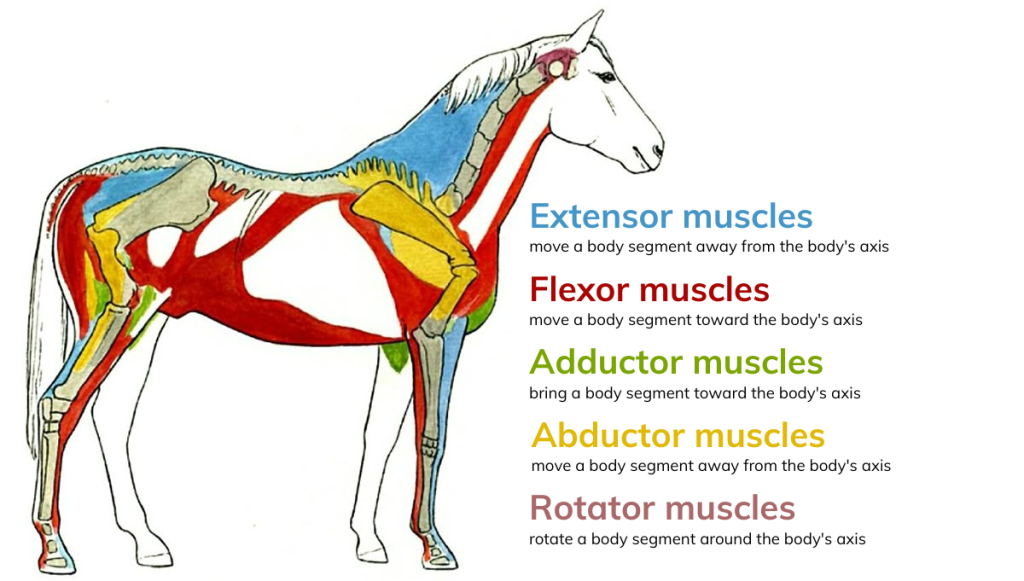
Source : FFE
A horse’s anatomy varies widely depending on each individual.
Several factors affect the shape of the back: breed, sex, age, wither size, chest size, back length, type of activity, etc.
When training, a horse’s back gets “out of shape” and creates different points of contact with the saddle. Flexing, extending and twisting the back affects its shape.
In terms of biomechanics, the saddle must fit the shape and movements of the back without restricting it. Essentially, a well-made saddle must “first and foremost, relieve pressure the length and breadth of the spine… and provide the spine with freedom to move during use.”
Projections (spinous processes, shoulder blades, processes) must be unrestricted. In practice, that means choosing a saddle tree and panels specifically for the horse’s body shape.
Saddle-makers design and adjust riding tack to improve the relationship between horse and rider.
Their structural decisions (gullet shape, panel type and padding, seat depth, knee blocks, etc.) have a direct impact on the rider’s posture. A well-fitting saddle provides the rider with the ultimate in balance.
It enables them to maintain a stable, aligned posture and move with the horse with no excessive muscle compensation. It other words, it keeps the rider’s centre of gravity in the middle of the saddle. However, an ill-fitting saddle “unbalances” the rider, meaning they can’t use their legs and hands properly. A poorly-positioned rider is less efficient: their position is unstable and that disrupts contact with the horse.
There are three key objectives for saddlers when making a saddle to measure:
A tailored saddle improves the performance of both horse and rider: a rider who feels comfortable and supported can better move with their horse, use their riding aids and improve endurance (less tiredness caused by muscle tension). On the other hand, an ill-fitting saddle results in discomfort and imbalance, making the rider less efficient. In practice, saddle-makers watch the horses in training, carefully measure the gullet size and saddle balance, then adjust parts to suit the discipline’s requirements (jumping, dressage, eventing, etc.). For example, they ensure they leave enough freedom around the shoulder, they centre the rider on the axis and compensate for any asymmetry to achieve vertical alignment for the horse and rider. To sum up, saddle-makers specialise in equine ergonomy: their technical skills (understanding of the horse’s back and rider’s posture) enable them to improve the comfort and efficiency of both horse and rider.
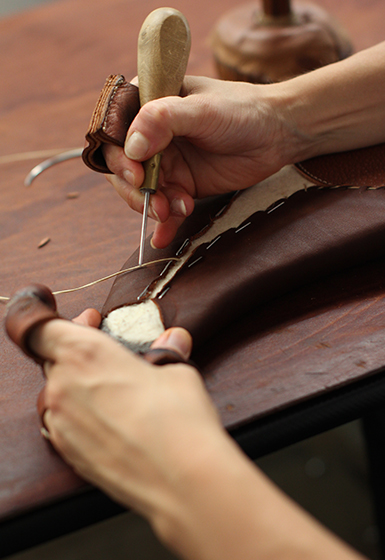
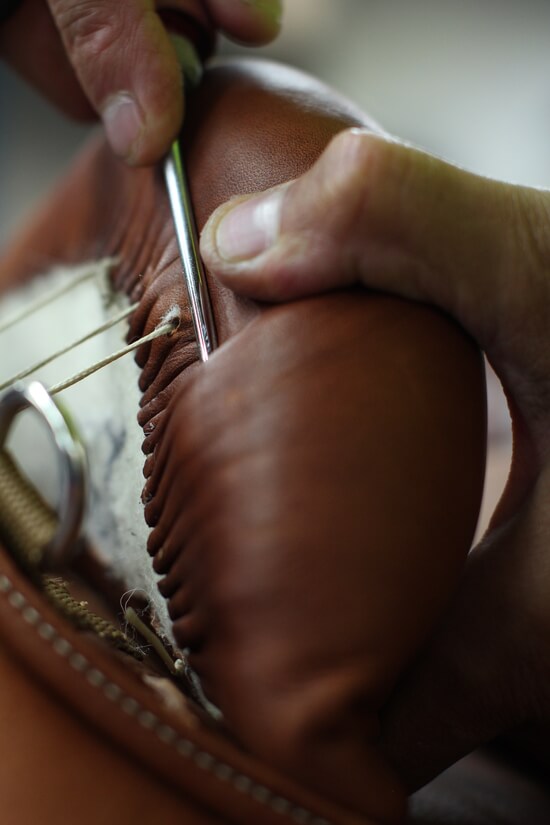
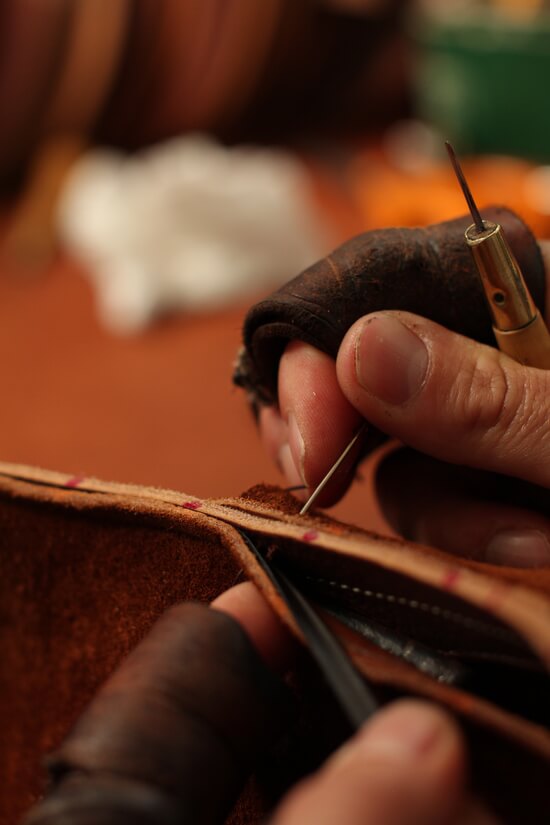
Razor-sharp craftsmanship and knowledge goes into making a bespoke Antarès saddle : each one contains over 75 leather and foam components are patiently crafted by our saddlers and harness makers.

As soon as it arrives in the workshop, the French leather is inspected before being cut on the table by a digital cutter for the ultimate in precision. The artisan saddler positions each template based on the quality of the leather to make the most out of each hide
The master saddle tree-maker hand-picks the traditional beechwood tree (from over 5000 models of the rigid saddle frame), attaches straps (nylon straps in strategic locations) and fills it with formed foam to create the perfect seat.
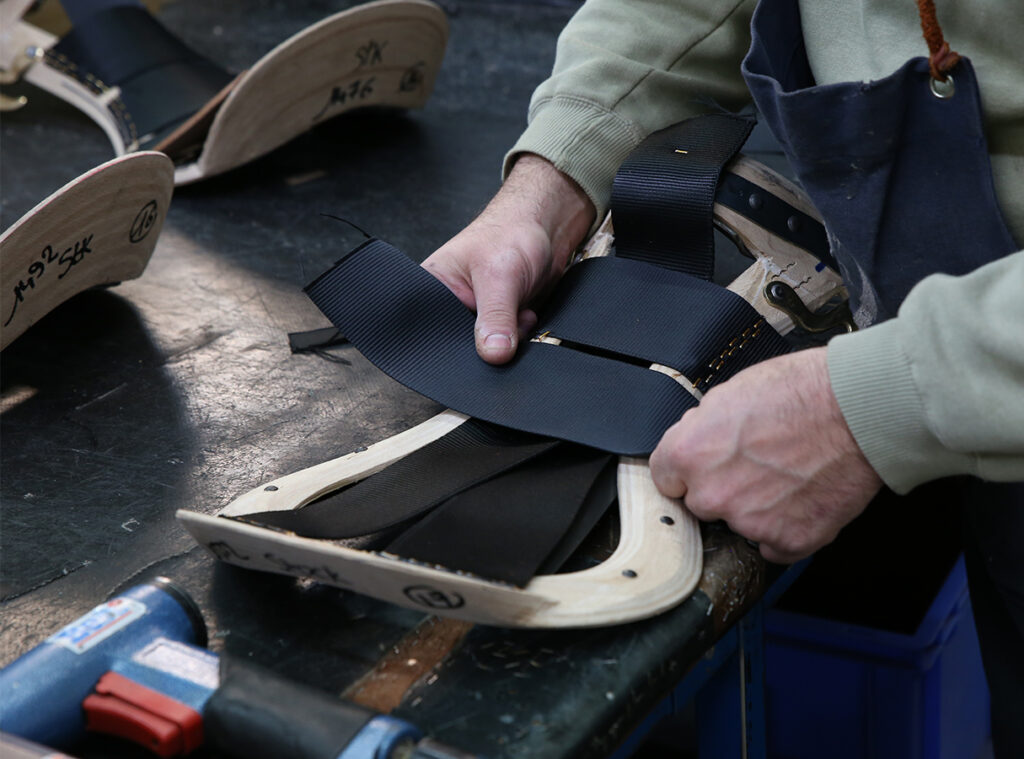
Antarès is always innovating and has designed a next-generation saddle tree, with the Extra Contact model taking the classic wooden tree to another level. This saddle tree is made from injectable copolymer and pairs two materials that work together: one provides pliability and the other provides hold, striking the perfect balance between flexibility and stability. It is designed to improve the horse’s biomechanical function: it frees up the spinal column, gives the spine freedom to move and enables the horse to engage its underline. It also improves pressure distribution by restricting the back less and freeing up the forequarters more, especially around the shoulder blades. This slimmer, more flexible and adaptable new saddle tree fulfils a rise in demand for precision when it comes to adapting to different body shapes, with the help of adjustable parts such as the gullet. Last but not least, it supports the rider’s position by improving the centre of gravity and providing a lighter, more balanced and more connected ride, which is ideal for the “close contact” experience everyone is looking for.
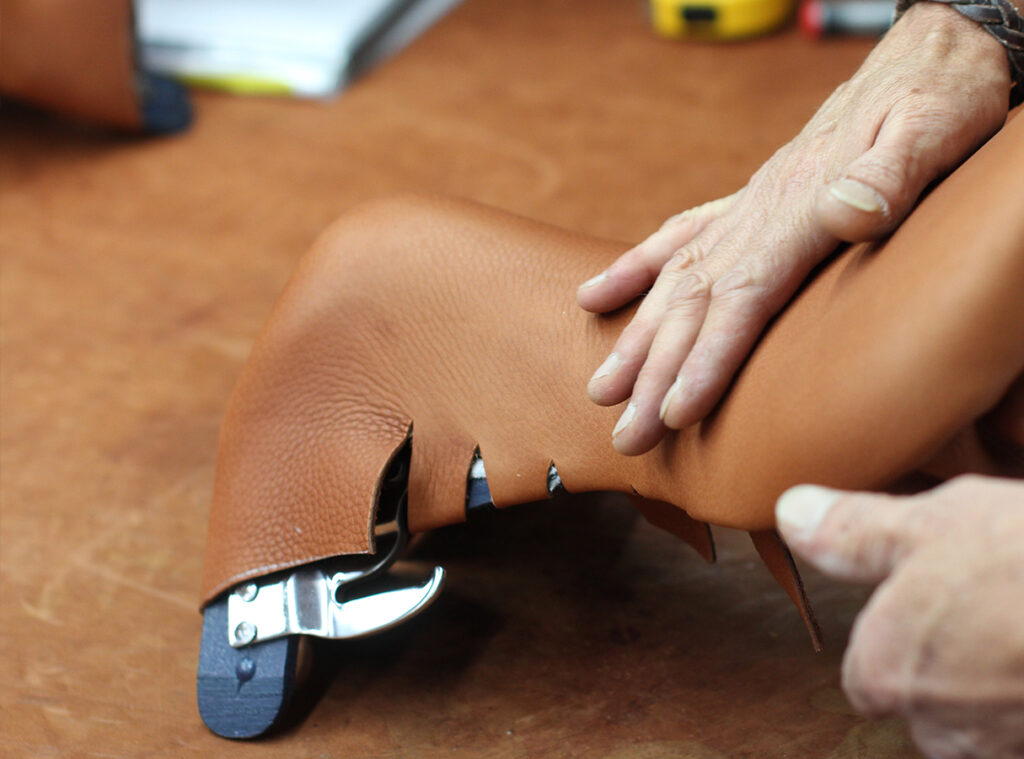
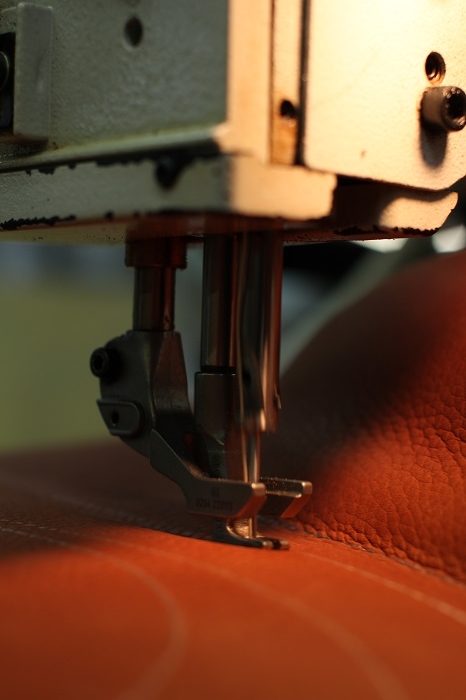
The leather is then stretched over the saddle tree with the ultimate in precision: the initial stretch lengthwise and crosswise must be to the nearest millimetre (too much makes the foam flat, too little causes creases). The saddler then assembles the skirt and seat: every join is drawn to suit builds, cut and hand-sewn with a keen eye on symmetry (200-300 stitches).
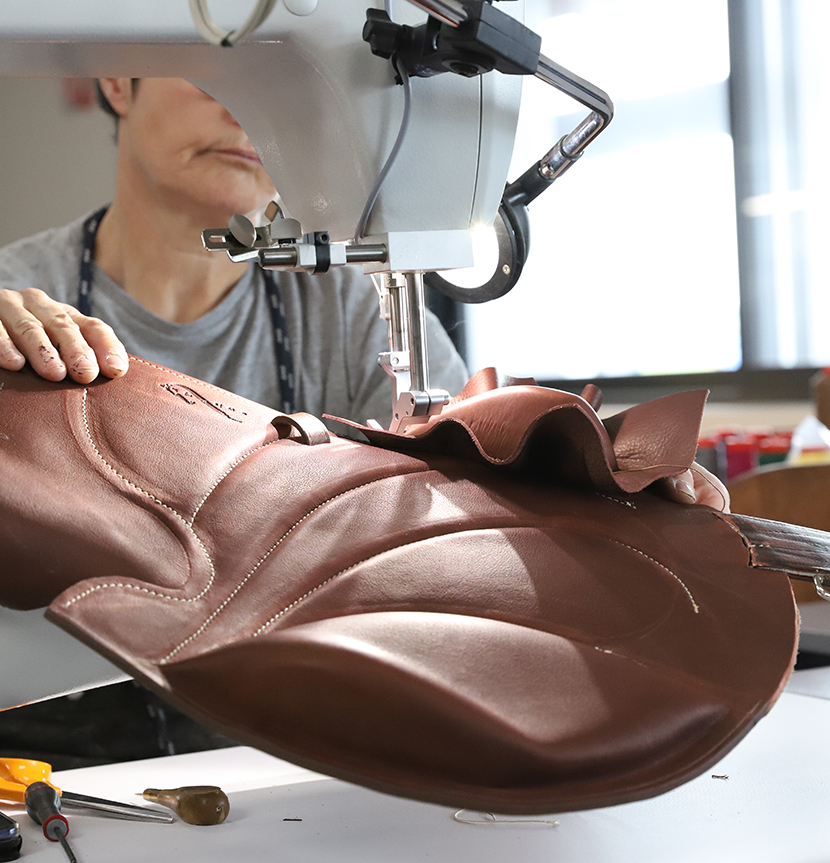
Putting the flaps together is just as decisive as work on the seat. Every flap is made from carefully-prepared leather and foam in several different thicknesses. When it comes to dual flap saddles, the craftsman positions the knee blocks exactly where indicated during the fitting, then covers them in leather before sewing and filling them. The flaps, sweat flaps, pommels, cantles and pads are then put together with the seams often sewn into the grooves for improved strength and durability. Every pair of flaps requires several trips to the sewing machine and their symmetry is closely monitored to ensure contact precision and leg stability for the rider.
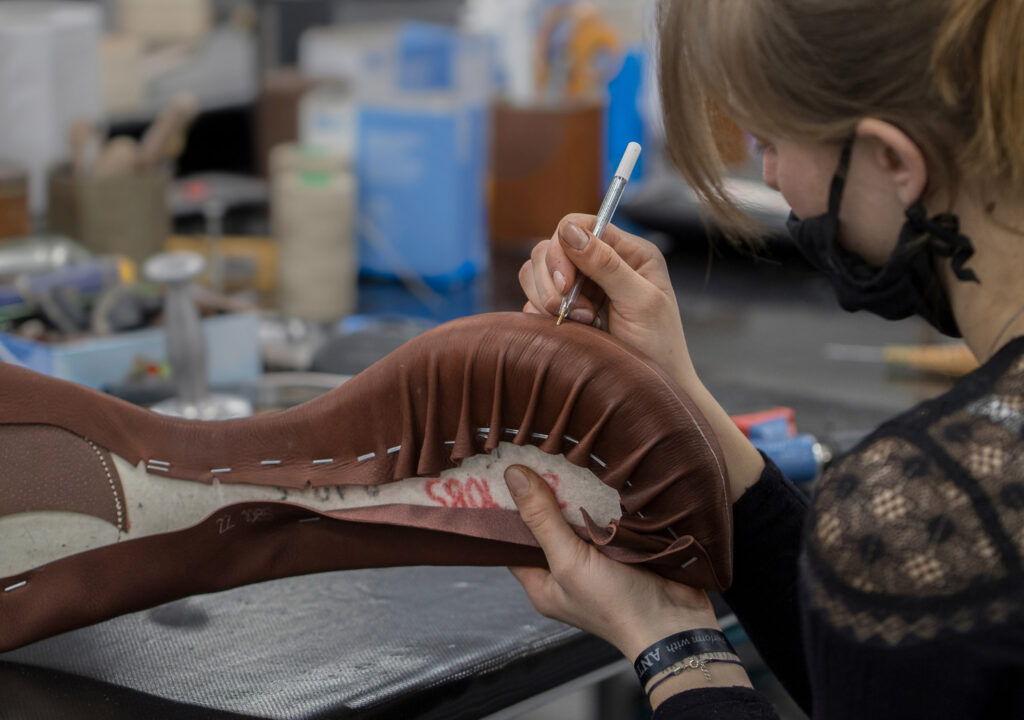
The panels, the interface between the saddle and the horse’s back, get even more attention. They are made-to-measure and have a felt structure made up of several key areas (back line, udder, nose) which pads and foam are fitted onto. Sculpting their shape involves meticulous forming to hug the shape of the horse’s back and distribute pressure evenly. Their leather shells are either applied damp, so they are perfectly smooth and fitted, or assembled in several parts with specific seams to avoid creasing and maximise contact surface. Every panel is checked individually to ensure symmetry, balance and compliance with the initial measurements.
Once fully assembled, the saddle is oiled then goes through a draconian quality control (over 65 check boxes) before delivery, to guarantee the high standards and longevity of the product.
Innovation and craftsmanship go hand in hand at Antarès Sellier. Behind every bespoke saddle is a collaboration between saddlers, the internal R&D department and equine professionals.
Their mission is to design saddles that continue to up the stakes in terms of precision, performance and respect for equine biomechanics.
The Antarès R&D department is constantly updating the technical components in the saddle, such as the tree, panels and filling materials. A meticulous approach goes into every development: observing the horse in motion, field tests, feedback from professional riders and gradual adjustments.
Innovation isn’t about standardisation; it’s about taking “made-to-measure” to new heights.
The R&D department’s technical advances elevate the saddler’s craftsmanship by giving them ever-more precise tools and techniques to tailor every saddle to suit horse and rider.
A bespoke riding saddle strikes the perfect balance between research and giving the horse and rider partnership exactly what they need.
Every bespoke saddle at Antarès Sellier is a vessel for French craftsmanship passed down through several generations and perfected since our workshops opened in 2000. Our saddles are designed and assembled by hand, piece by piece, by passionate artisans in our workshops in Saintes, deep in the Charente-Maritime.
Their craftsmanship is what makes all the difference: no machine can replace an experienced saddler.
So, when you buy an Antarès saddle, you invest in a lovingly-crafted product made in France.
Whether it be our jumping saddles, dressage saddles or monoflap saddles, our craftsmanship gives you comfort, quality, style and the passion of the team behind your saddle.
Consultations with our experts focus on biomechanics to create pieces that are tailor-made to suit both the rider and horse’s body shapes.
Our saddle fitters are real experts.
Antarès saddle fitters are trained in saddle fitting and coached by equine osteopaths. They can analyse the horse’s anatomy (pectorals, back, withers) and rider’s posture in detail.
During the fitting and sizing, our saddle fitters start with a static assessment of the horse’s body shape. Once complete, they choose a test saddle to address the findings of the assessment, then they carefully place it on the stationary horse’s back. The initial fitting helps assess key balance areas: the position of the tree compared to the withers, the distribution of weight across the back line, shoulder freedom and general saddle positioning.
The review moves onto the three gaits for a dynamic assessment. Whilst walking, the saddle fitters analyse how consistent the movement is and how well the saddle moves with the back’s natural oscillations. Whilst trotting, they focus on longitudinal and lateral stability alongside shoulder freedom. Whilst cantering, they monitor overall balance, the horse’s ability to extend and engage freely. At every stage, they monitor the horse for changes in behaviour, movement or mood.
Then it’s time for the rider to mount the horse. This stage of the initial assessment is crucial, because no saddle fitting is complete without seeing the interaction between horse and rider. The saddle fitters look at the rider’s position, the pair’s overall balance and the rider’s feedback: seat stability, freedom to move, quality of contact. These details help fine-tune the choice of saddle and identify any modifications that may be required.
The session may include a jumping test where necessary. It helps assess the saddle in situations where more is demanded of it, i.e. leading, jumping and landing. The fitters look at saddle stability, how well it stays in place without slipping forwards or backwards, as well as how much freedom the horse has to use its back and shoulders. This stage is particularly illuminating because it highlights any potential limitations that may go unnoticed during flatwork.
These observations, the initial measurements and the rider’s feedback help conduct an accurate assessment and suggest an appropriate saddle to ensure the horse is comfortable and the rider is in the right position.
This meticulous process is what makes a saddle truly bespoke.
When you reach out to a saddle fitter, you get all-encompassing support. Our specialists in the field are here to help you tweak every detail and find the right tack for your ride.